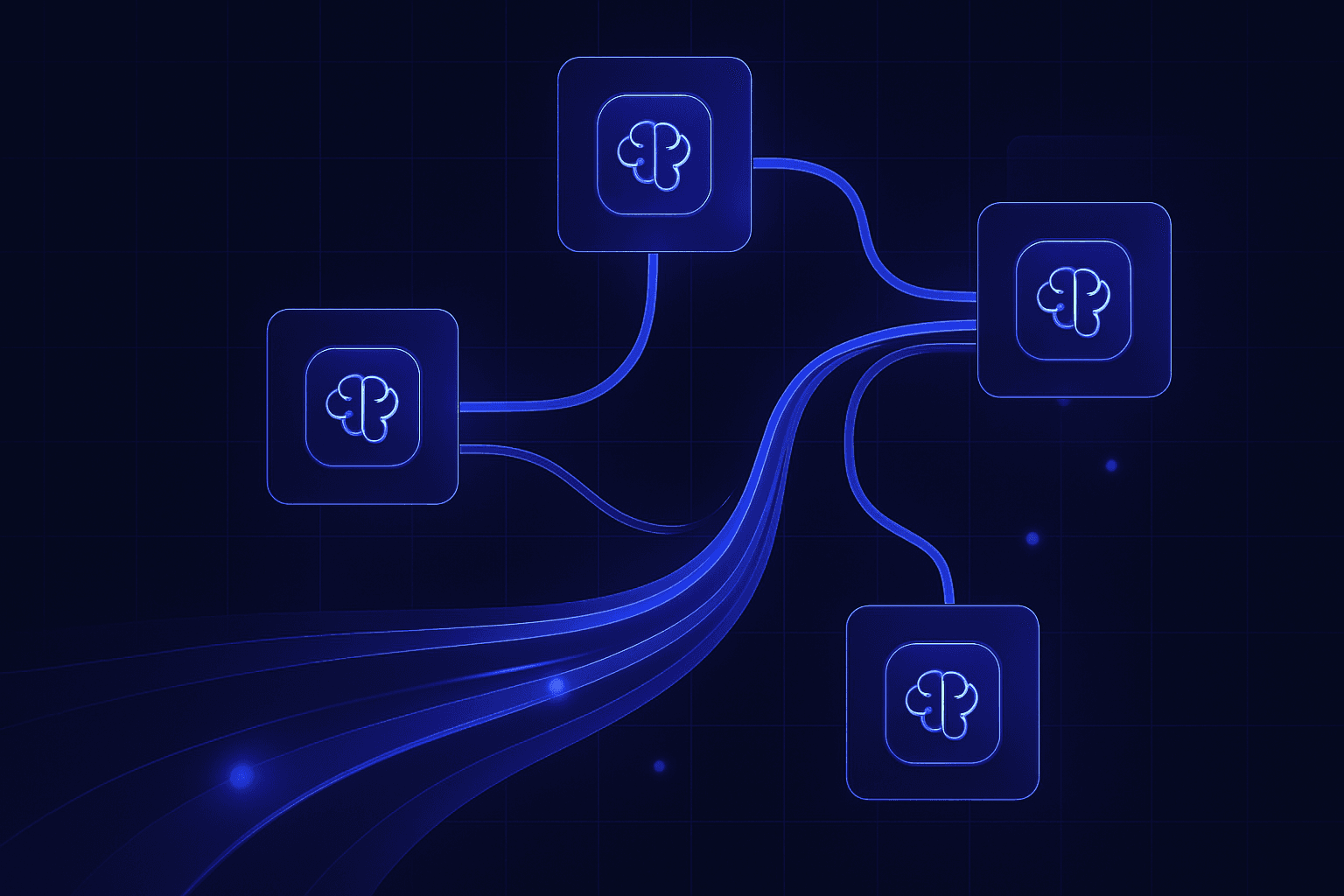
When you really want to make sure, run multiple sub-agents multiple times. Aggregate, de-dupe, then plan.
The Core Idea
Single agent runs have blind spots. Multiple agents from multiple perspectives catch what individuals miss.
10 agents × 4 runs = 40 perspectives → De-dupe → Solid plan
Example prompt:
“Launch at least 10 sub-agents to find performance issues, critical errors, or bugs in the pub/sub and rate limiting code. Aggregate the data, de-dupe, then make a SOLID plan.”
Two Modes of Work
Investigative Mode
Find problems in existing code.
recurse(
  human(decide what to investigate)
  → agents(investigate)
  → find gaps/issues/refactors
  → fix gaps
  → run tests
  → fix tests
)
Forward Planning Mode
Build new features with confidence.
recurse(
  human(define new chunk of work)
  → agents(generate spec)
  → human(refine spec)
  → agents(generate code)
  → run tests
  → confirm working
  → de-dupe/consolidate
  → DIGEST.md
)
Perspective Multiplication Patterns
Pattern 1: Many Perspectives
Generate different perspectives, collapse into optimal plan.
Agent 1: Security perspective
Agent 2: Performance perspective
Agent 3: Maintainability perspective
Agent 4: Edge cases perspective
Agent 5: Integration perspective
         ↓
    Aggregate
         ↓
   De-duplicate
         ↓
    Final Plan
Prompt:
Launch 5 sub-agents to review this code, each with a different focus:
1. Security vulnerabilities
2. Performance bottlenecks
3. Code maintainability
4. Edge cases and error handling
5. Integration points and contracts

Aggregate findings, remove duplicates, prioritize by severity.
Pattern 2: Same Perspective Multiple Times
Run the same analysis multiple times to catch probabilistic misses.
Agent 1: Find bugs (run 1)
Agent 2: Find bugs (run 2)
Agent 3: Find bugs (run 3)
Agent 4: Find bugs (run 4)
         ↓
    Aggregate
         ↓
   De-duplicate
         ↓
  Higher confidence
Why this works: LLMs are probabilistic. Run the same prompt 4 times, you’ll get different findings each time. The union catches more than any single run.
Pattern 3: Many-Many Perspectives
Maximum thoroughness: multiple perspectives × multiple runs.
10 agents × 4 runs = 40 total analyses
         ↓
    Aggregate all
         ↓
   De-duplicate
         ↓
    Final Plan
Prompt:
I want maximum confidence on this analysis.

Run 10 different sub-agents (security, performance, types, tests,
edge cases, race conditions, memory leaks, API contracts, error
handling, logging/observability).

Run each perspective 4 times.

Aggregate all 40 analyses, de-duplicate findings, rank by:
1. Severity (critical > high > medium > low)
2. Confidence (found by multiple runs > single run)
3. Effort to fix

Output a prioritized action plan.
Specialized Analysis Patterns
Spec Drift Detection
Check code vs design vs tests and spot mismatches.
Agent 1: Read the spec/design docs
Agent 2: Analyze the implementation
Agent 3: Analyze the tests
         ↓
    Compare all three
         ↓
   Find mismatches
Prompt:
Launch 3 sub-agents:
1. Extract intended behavior from specs in `/docs`
2. Extract actual behavior from implementation in `/src`
3. Extract tested behavior from tests in `/tests`

Compare the three. Report:
- Spec says X but code does Y
- Code does X but no test covers it
- Test expects X but spec says Y
Invariant Extraction
Have agents tell you what MUST always be true.
Agents analyze code
         ↓
   Extract invariants
         ↓
  "These must ALWAYS be true"
         ↓
   Generate assertions/tests
Prompt:
Analyze this codebase and extract invariants—things that must
ALWAYS be true for the system to be correct.

Examples:
- "User balance must never be negative"
- "Every request must have a trace ID"
- "Cache TTL must be less than DB TTL"

For each invariant:
1. State the invariant
2. Where it should be enforced
3. Draft the assertion or test
Swarm Types for Read Operations
Individual Swarms
Multiple agents working independently on the same problem.
┌─────────┐  ┌─────────┐  ┌─────────┐
│ Agent 1 │  │ Agent 2 │  │ Agent 3 │
└────┬────┘  └────┬────┘  └────┬────┘
     │            │            │
     └────────────┼────────────┘
                  ↓
             Aggregate
Use when: You want breadth of coverage, independent analysis.
Competing Swarms
Two agents compete, critique each other, converge on truth.
┌─────────┐        ┌─────────┐
│ Agent A │ ←───→  │ Agent B │
└────┬────┘        └────┬────┘
     │    critique      │
     └────────┬─────────┘
              ↓
         Converged
          analysis
Prompt:
Launch two competing agents:

Agent A: Find all the problems with this code.
Agent B: Review Agent A's findings. Which are valid? Which are
         false positives? What did Agent A miss?

Then Agent A reviews Agent B's critique.

Continue for 2 rounds. Output the agreed-upon findings.
Use when: You want higher confidence through adversarial review.
Dimensions of Analysis
Swarms can operate across different dimensions:
| Dimension | What’s Analyzed |
|---|---|
| Static code | Source files only |
| Code + tests | Implementation and test coverage |
| Code + tests + linter | Add linter/type checker output |
| Code + tests + runtime | Add logs, traces, metrics |
| Code + spec + tests | Full spec drift detection |
Example multi-dimensional prompt:
Analyze the auth module across all dimensions:

1. Static analysis: Read src/auth/*.ts
2. Test coverage: Read tests/auth/*.test.ts, check coverage gaps
3. Type safety: Run `tsc --noEmit`, analyze errors
4. Linter: Run `biome check`, analyze warnings
5. Runtime: Review recent error logs for auth failures

Synthesize findings across all dimensions.
Implementation: Swarm Launcher
# .claude/commands/swarm-analyze.md
I want to run a thorough analysis swarm on the specified code.

Parameters:
- Target: $ARGUMENTS (files or directories to analyze)
- Perspectives: security, performance, types, tests, edge-cases,
  race-conditions, error-handling, observability
- Runs per perspective: 2

Process:
1. Launch sub-agents for each perspective
2. Each agent analyzes the target independently
3. Aggregate all findings
4. De-duplicate (same issue found by multiple agents = higher confidence)
5. Rank by severity and confidence
6. Output prioritized action plan with specific file:line references
When to Use Swarms
| Scenario | Pattern |
|---|---|
| Pre-deploy safety check | Many perspectives × 1 run |
| Critical bug investigation | Same perspective × 4 runs |
| Major refactor validation | Many-many (10 × 4) |
| Spec compliance check | Spec drift detection |
| New codebase onboarding | Invariant extraction |
| Code review augmentation | Competing swarms |
Stacking Claude Code with Agent SDK
The most powerful pattern: programmatically launch multiple Claude Code instances.
Architecture
┌─────────────────────────────────────────────────────────────┐
│                    Orchestrator (Agent SDK)                 │
│                                                             │
│  ┌──────────┐  ┌──────────┐  ┌──────────┐  ┌──────────┐   │
│  │ Claude   │  │ Claude   │  │ Claude   │  │ Claude   │   │
│  │ Code #1  │  │ Code #2  │  │ Code #3  │  │ Code #4  │   │
│  │          │  │          │  │          │  │          │   │
│  │ Security │  │ Perf     │  │ Types    │  │ Tests    │   │
│  └────┬─────┘  └────┬─────┘  └────┬─────┘  └────┬─────┘   │
│       │             │             │             │          │
│       └─────────────┴──────┬──────┴─────────────┘          │
│                            ↓                               │
│                    Aggregate + De-dupe                     │
│                            ↓                               │
│                      Final Report                          │
└─────────────────────────────────────────────────────────────┘
Implementation
import { ClaudeAgent } from '@anthropic/agent-sdk';

async function swarmAnalysis(target: string) {
  const perspectives = [
    { name: 'security', prompt: `Find security vulnerabilities in ${target}` },
    { name: 'performance', prompt: `Find performance issues in ${target}` },
    { name: 'types', prompt: `Find type safety issues in ${target}` },
    { name: 'tests', prompt: `Find missing test coverage in ${target}` },
    { name: 'edge-cases', prompt: `Find unhandled edge cases in ${target}` },
  ];

  // Launch 5 Claude Code instances in parallel
  const results = await Promise.all(
    perspectives.map(async (p) => {
      const agent = new ClaudeAgent({
        model: 'claude-sonnet-4-20250514',
        tools: ['Read', 'Grep', 'Glob', 'Bash'],
      });

      const result = await agent.run(p.prompt);
      return { perspective: p.name, findings: result };
    })
  );

  // Aggregate and de-duplicate
  const allFindings = results.flatMap(r => r.findings);
  const deduplicated = deduplicateFindings(allFindings);
  const prioritized = prioritizeBySeverity(deduplicated);

  return prioritized;
}
Multiple Runs per Perspective
For maximum thoroughness, run each perspective multiple times:
async function thoroughSwarm(target: string, runsPerPerspective = 4) {
  const perspectives = ['security', 'performance', 'types', 'tests'];

  // 5 perspectives × 4 runs = 20 parallel agents
  const tasks = perspectives.flatMap(p =>
    Array(runsPerPerspective).fill(null).map((_, i) => ({
      perspective: p,
      run: i + 1,
      prompt: `[Run ${i + 1}] Find ${p} issues in ${target}`,
    }))
  );

  const results = await Promise.all(
    tasks.map(t => launchAgent(t.prompt))
  );

  // Findings found by multiple runs = higher confidence
  const withConfidence = scoreByRedundancy(results);

  return withConfidence;
}
When to Use SDK Stacking
| Use Case | Agents | Runs | Total |
|---|---|---|---|
| Quick sanity check | 3 | 1 | 3 |
| Pre-deploy review | 5 | 2 | 10 |
| Security audit | 10 | 4 | 40 |
| Major release | 10 | 4 | 40 |
Trade-off: More agents = more cost + latency, but higher confidence.
Key Insight
Single agent = single roll of the dice. Swarm = loaded dice.
LLMs are probabilistic. Any single run might miss something. Multiple runs from multiple angles approach certainty.
The cost is tokens. The benefit is confidence.
Related
- Building the Harness – Meta engineering layer
- 12 Factor Agents – Factor 10: Small, Focused Agents
- Learning Loops – What to do with swarm findings
- Parallel Agents for Monorepos – Apply swarm patterns to monorepo-wide changes
- Actor-Critic Adversarial Coding – Specialized swarm pattern with actor and critic roles
- Sub-Agent Architecture – Implementation details for swarm agents
- Agent-Native Architecture – Design principles for agent-first systems
- Sub-agents: Accuracy vs Latency – Trade-offs when using multiple agents