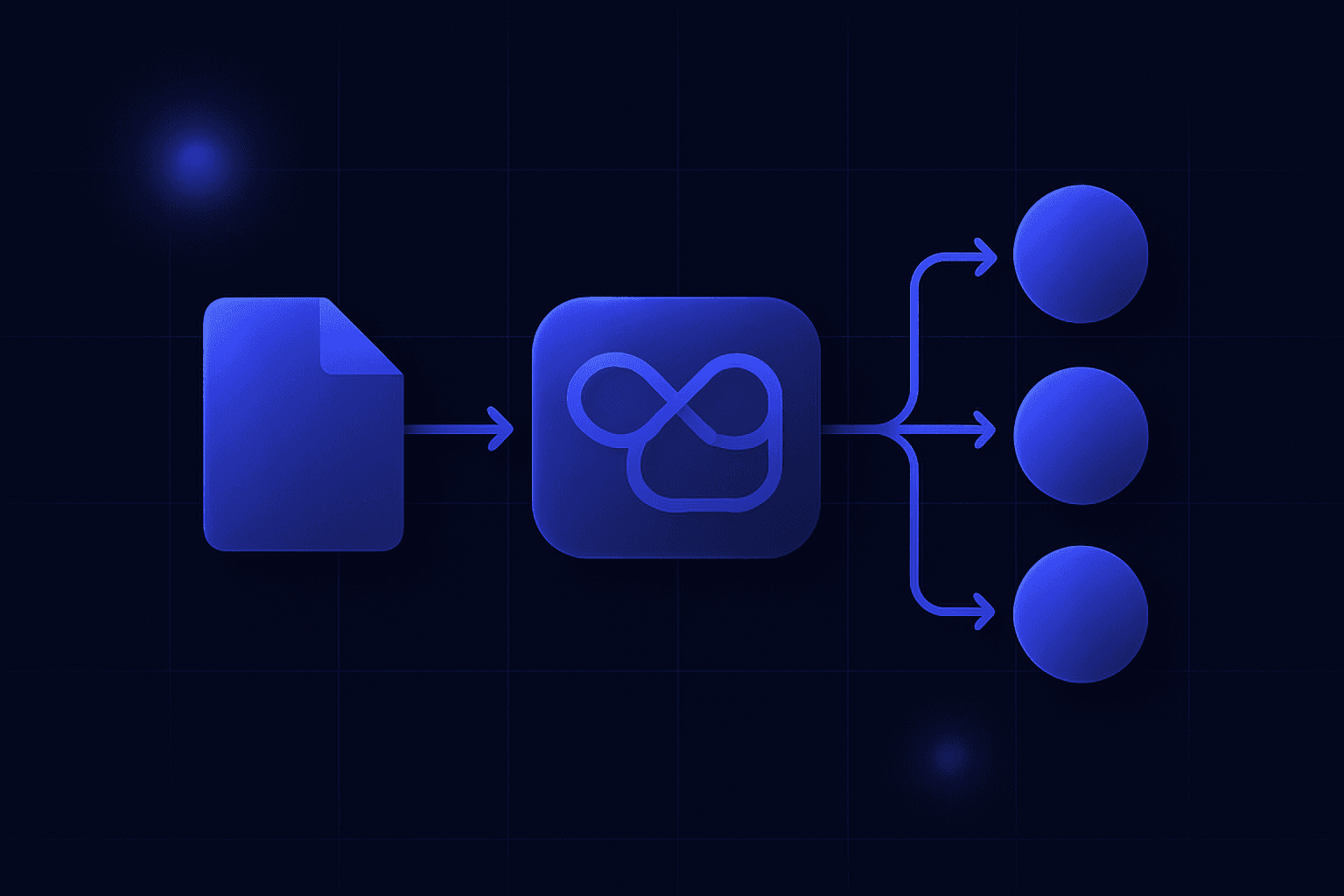
Obsidian + Claude Code + QMD eliminates all friction between seeing an idea and having it searchable, deduplicated, and published.
Author: James Phoenix | Date: March 2026

The Problem
Bookmarks rot. Notes in emails get buried. Browser tabs pile up and crash. “I’ll save this for later” means “I’ll never find this again.”
Every knowledge worker has a graveyard of half-used systems: Notion databases with 200 untagged entries, Pocket queues stretching back years, Slack threads with “important” links that nobody can find. The friction between “I found something valuable” and “I can retrieve it when I need it” kills most knowledge systems before they start.
The Pipeline
Source (YouTube, X, article, idea)
  │
  ▼
Dump raw text into Claude Code
  │
  ▼
Claude writes/updates Obsidian note
  │
  ▼
QMD deduplicates via semantic + keyword search
  │
  ▼
Auto-sync to website
Each step has near-zero friction. No manual tagging, no folder decisions, no formatting overhead.
How It Works
Step 1: Capture
See something valuable? Copy the text and paste it into Claude Code. That’s it.
- YouTube video: Grab the transcript, paste it in. “Write a note summarizing the key insights from this transcript.”
- X post / thread: Copy the text. “Capture the core idea from this post.”
- Article: Paste the relevant section. “Add this to my knowledge base.”
- Own idea: Just describe it. “I want to capture this thought about X.”
No context switching. No opening a different app. No deciding which folder it goes in. Claude handles the formatting, the wikilinks, the file placement.
Step 2: Deduplication with QMD
This is the part that prevents knowledge bases from becoming landfills.
QMD indexes the entire Obsidian vault with BM25 keyword search, vector embeddings, and LLM re-ranking. The custom CLAUDE.md prompt instructs Claude to run 2-3 QMD queries plus Grep searches before writing anything new. This dual search strategy catches both semantic overlaps (QMD) and exact phrase matches (Grep) that vector search might miss.
Before writing a new note:
  1. qmd_query "core concept" → semantic matches
  2. qmd_search "exact phrase" → keyword matches
  3. Grep for file names and specific terms

Result: Either update an existing note or confirm it's genuinely new.
This means the knowledge base stays lean. No duplicate notes about the same concept from different sources. If a YouTube video covers something already documented, Claude updates the existing note with the new perspective rather than creating a parallel entry.
Step 3: Auto-Sync to Website
The Obsidian vault auto-syncs to the website. Write locally, it appears publicly. No manual publish step, no CMS, no copy-pasting between systems.
Why This Works
Friction kills systems, not motivation
The difference between “I should save this” and actually saving it needs to be under 10 seconds. Anything more and the capture rate drops off a cliff. This pipeline keeps it to: copy text, paste into Claude, done.
LLMs are perfect formatters
Humans are bad at consistent formatting, tagging, and cross-referencing. LLMs are great at it. Claude applies the right frontmatter, uses the right wikilink syntax, follows the folder conventions in CLAUDE.md, and links to related notes. Offloading this to the LLM means every note is properly integrated into the knowledge graph on arrival.
Deduplication is the difference between a knowledge base and a junk drawer
Most personal knowledge systems fail because they accumulate without consolidating. QMD semantic search before every write operation means the vault converges rather than sprawls. Over time, notes get richer (more sources, more angles on the same concept) rather than more numerous.
Publishing removes the “should I share this?” decision
When publishing is automatic, there’s no activation energy for sharing. Every note you capture is immediately available as a reference you can link to, share, or build on publicly. This turns private learning into a public body of work with zero additional effort.
The Stack
| Component | Role |
|---|---|
| Obsidian | Local-first markdown vault. Files on disk, no vendor lock-in. |
| Claude Code | Intake processor. Formats, links, places, and deduplicates notes. |
| QMD | Semantic search + deduplication. BM25, vector search, LLM re-ranking. |
| CLAUDE.md | Custom prompt: run multiple QMD queries + Grep before writing. |
| Auto-sync | Vault syncs to website. Write once, published everywhere. |
Before vs After
Before (bookmarks, email notes, Pocket, etc.):
Capture rate: ~20% of valuable things seen
Retrieval rate: ~5% of things saved
Time to capture: 1-5 minutes (open app, decide folder, format)
Deduplication: None (same link saved 3 times in different places)
Published: Never (too much friction to turn notes into posts)
After (Obsidian + Claude Code + QMD):
Capture rate: ~90% of valuable things seen
Retrieval rate: ~95% of things saved (semantic search)
Time to capture: <10 seconds (paste into Claude)
Deduplication: Automatic (QMD checks before every write)
Published: Automatic (vault syncs to website)
Key Insight
The best knowledge system is the one with the least friction. If capturing an idea takes more than 10 seconds, the system will fail. Build the pipeline so the hard parts (formatting, linking, deduplication, publishing) happen automatically.
Related
- Prompts Are the Asset – The conversations that generate notes are themselves valuable
- Institutional Memory – QMD deduplication prevents knowledge rot
- Ad-hoc to Scripts – This pipeline started as ad-hoc prompts and became a system
- Building the Factory – Knowledge capture as compound infrastructure
- Zero-Friction Onboarding – Same philosophy applied to developer setup
References
- QMD by Tobi Lutke – Local semantic search engine for markdown