Self-hosting was never expensive because of hardware. It was expensive because of the operational labor. Agents just repriced that labor to near zero.
Author: James Phoenix | Date: July 2026
The Received Wisdom Was Never About Money
For a decade the advice was the same: do not self-host. Put it on Vercel, put it on a managed database, let someone else carry the pager. I believed it, and I still repeated it to clients.
The interesting part is that the advice was never really about hardware cost. A Mac Studio and a NAS sitting on my desk are cheaper per month than a mid-size managed Postgres. The machines were never the bottleneck. The bottleneck was the operational labor, and that labor is exactly what AI agents just made cheap.
Self-hosting was expensive because of the boring failures. SSH into a box that stopped responding. A systemd unit that silently failed on reboot. A port conflict. A backup cron that had been throwing errors for three weeks and nobody noticed. NAT and firewall rules you had to reason about every time a service needed to talk to another service. None of that is intellectually hard. It is just relentless, and it lands at inconvenient hours. That grind is what made managed cloud worth the premium.
What Actually Changed
Three things collapsed the labor cost at the same time, and the combination is what makes this a one-way door.
Tailscale removed the networking friction. Every machine I own joins one private mesh. The Mac Studio, the NAS, a cloud VM, my laptop. They address each other directly by name, no port forwarding, no reverse proxy gymnastics, no reasoning about NAT. Random boxes behind a router become one flat, private, programmable substrate. The question stops being “how do I make this reachable” and becomes “which machine should own this.”
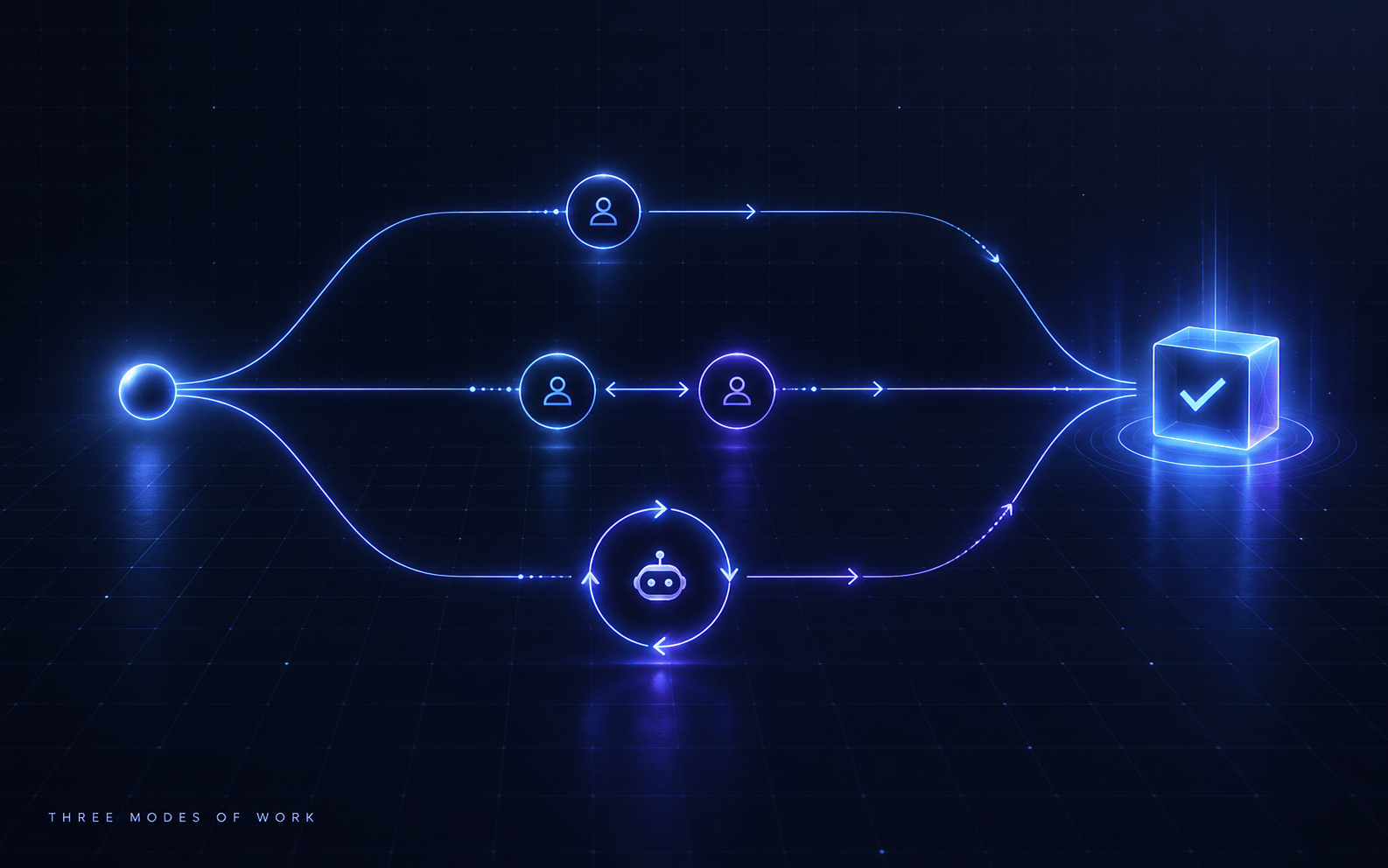
Temporal removed the fragility. The classic self-hosting failure is that a process starts real work, the process dies, and the work is simply gone. Temporal turns intent into a durable object. The workflow records what should happen, activities run wherever the capability lives, machines crash and retry, and the state survives. This is the difference between “I ran a script on my server” and “my server operates a system.” I have written the full decision framework for this in Three Execution Modes, so I will not repeat it here.
Claude removed the ops labor itself. This is the piece that reprices everything. An agent that can traverse machines over the mesh will SSH into any box, read the actual logs, find the failed unit, fix it, and tell me what it did. It has ground truth at the layer where truth lives, which is the point I keep making in Linux Is the Execution Substrate. The 2am grind of self-hosting was never the fun part. Now I delegate the grind and keep the design decisions.
Take those three together and the premium you were paying managed cloud to avoid mostly evaporates. You were renting someone else’s ops team. You can now run your own for the price of tokens.
The Mental Model Flips
Before, deployment was a location problem. “Where should this live so it is reachable and someone maintains it?” That framing pushes everything toward a single managed platform, because a single platform is one less thing to operate.
After Tailscale, Temporal, and an agent that can operate the boxes, deployment becomes a capability problem. “Which machine is best suited to own this responsibility?” That is a completely different question, and it unlocks optionality you did not have before.
| Workload | Best home | Why |
|---|---|---|
| Render video, ffmpeg, sharp | Mac Studio | CPU/GPU and media binaries already live there |
| Temporal, Postgres, backups | NAS | Cheap, always on, durable backbone |
| Public API, webhooks | Cloud Run or a VM | Needs public availability and burst capacity |
| Frontend | Vercel | Boring request/response, let it stay boring |
| Object storage, backups | GCS | Off-site durability |
Each machine becomes a specialised muscle. Tailscale is the private nervous system that connects them. Temporal is the durable brain that decides what runs and retries when it fails. The public API stays a thin command layer at the edge. That is proper infra thinking, and it used to be reserved for teams with an ops function.
The Danger Is Overdoing It
The failure mode here is obvious once you feel the power: you try to make everything Temporal and everything self-hosted. That is the wrong lesson.
The elite version of this is a split, not a religion. Anything long-running, retryable, expensive, stateful, scheduled, or operationally important earns durable orchestration. Everything request/response stays boring. Login, register, a CRUD dashboard, chat streaming, previewing a plan: none of that wants Temporal. Scheduling a post, rendering fifty ad variants, retrying a failed upload, a nightly docs refresh: all of that does.
Self-hosting has the same discipline. The NAS is cheap durable infra, not magic high availability. Keep public ingress in the cloud unless there is a very strong reason not to, because public availability is one thing you genuinely should rent. Make every Temporal activity idempotent, so a retry is safe. And write one boring runbook for the day a machine dies:
If the Mac Studio dies:
- workflows stay pending, no data is lost
- point the render task queue at a cloud worker or spare machine
- work resumes where it stopped
That runbook is the whole point. When a machine dying is a task-queue reassignment instead of a lost night, you are no longer a developer with some servers. You are operating a small infra platform, and the agent is your on-call.
Why You Cannot Go Back
Once you have felt this, putting everything back on one managed Node server feels like Lego Duplo. Not because managed platforms are bad, they are excellent for the boring edge, but because you have seen what it feels like to own the substrate.
You can now say “this runs on the Mac Studio because it has the media binaries,” “this runs on the NAS because it is cheap and always on,” “this runs in the cloud because it needs to be public,” and “this is Temporal because I care about correctness.” Every one of those is a deliberate choice, and none of them costs you a weekend of ops anymore.
The hardware was always affordable. The reason nobody self-hosted was the labor, and the labor just got repriced. That is the actual news.